
Why This Kind of Testing Matters
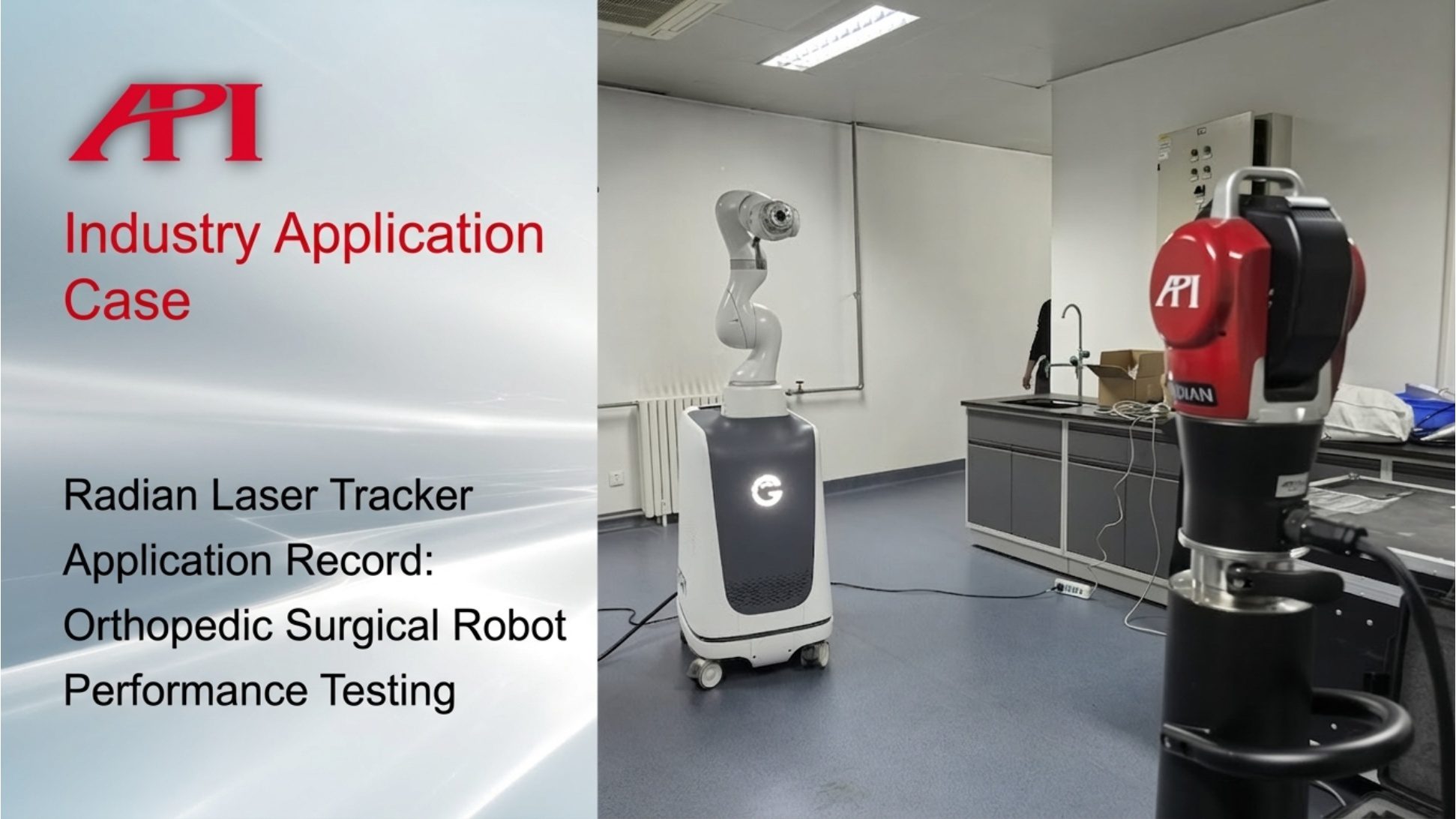
Surgical robots are held to a different standard than most automation equipment, and for good reason. When a robot is guiding or carrying tools used in an orthopedic procedure, even small motion errors can become safety problems fast. Accuracy matters, repeatability matters, and dynamic behavior during abnormal events matters just as much.
That is why medical-robot validation cannot stop at a basic calibration check. Standards such as YY/T 1712-2021, with reference to ISO 9283, exist to make sure the robot's real-world behavior is measured, documented, and understood before that system is trusted in a high-stakes environment.
What Has To Be Verified
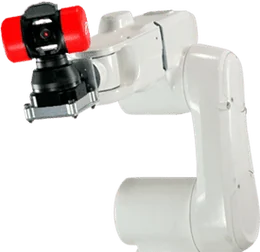
The robot in this case is an open-chain structure made of rigid links and moving joints, with a free end carrying the surgical end effector. As the robot moves, gravity and inertial loads shift throughout the work envelope, which means performance changes have to be measured across motion, not assumed from a static setup.
That leads to a long list of checks: pose accuracy, repeatability, path behavior, overshoot, stabilization time, drift, and more. API's workflow covers all of those categories in a single measurement strategy, giving the team a practical way to evaluate how the robot actually behaves.
Where the Radian Pro Fits
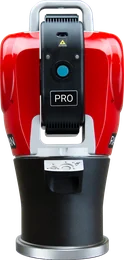
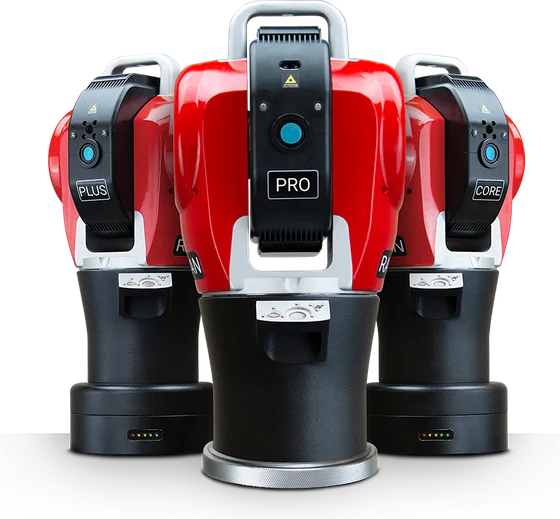
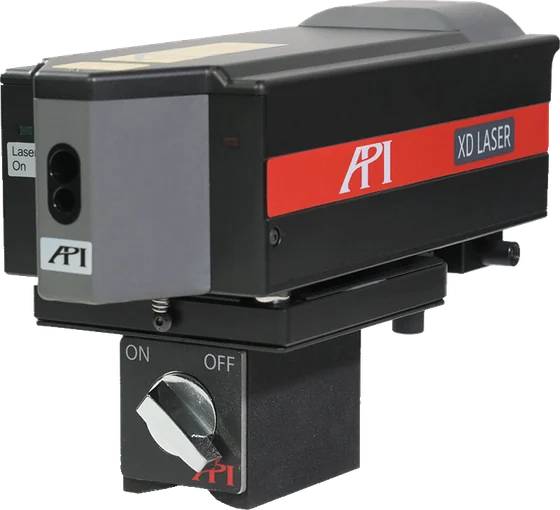
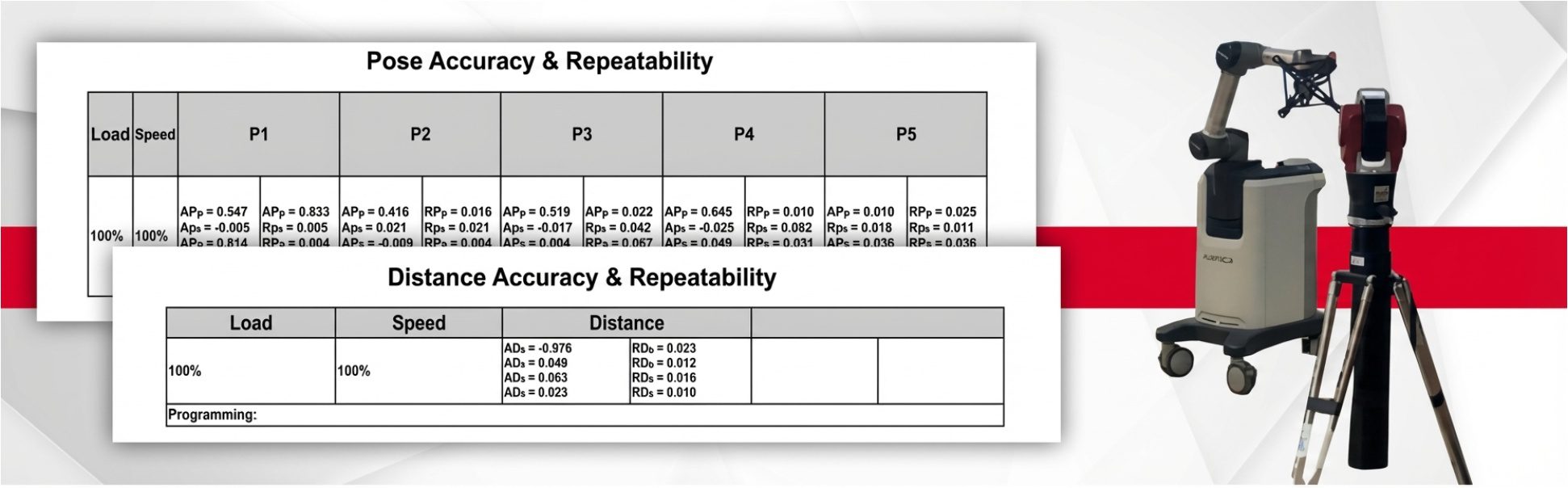
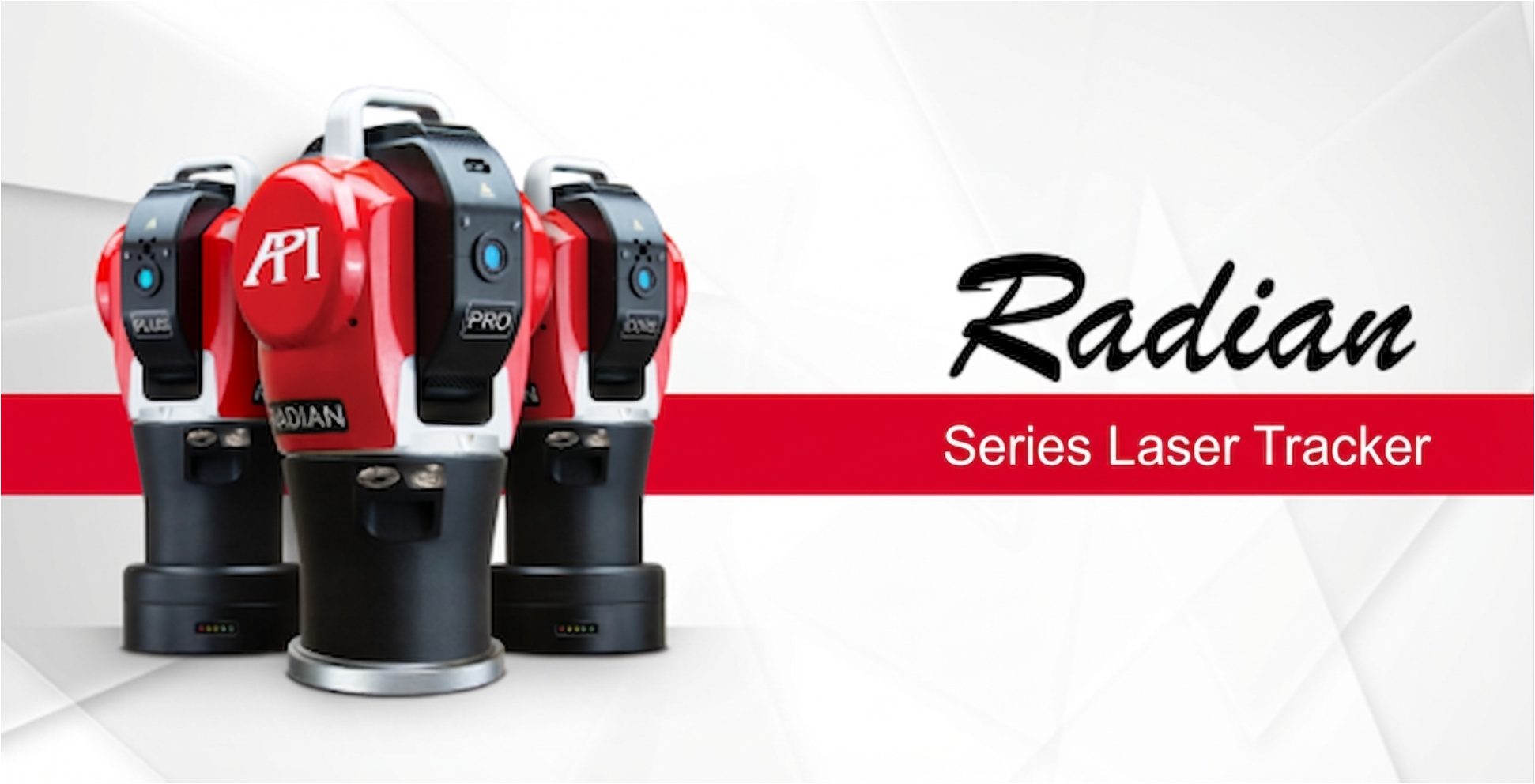
The test workflow centers on the API Radian Pro laser tracker. Using the tracker together with RMS software, API can evaluate 14 performance characteristics defined by the medical-robot testing standard, including pose accuracy, multi-direction variation, distance accuracy, path repeatability, corner deviation, static compliance, and oscillation behavior.
That matters because the team is not stitching together several tools and hoping the data lines up afterward. One platform captures the robot's motion, feeds it directly into analysis software, and makes it easier to compare actual robot behavior with the expected motion path.

How the Measurement Works
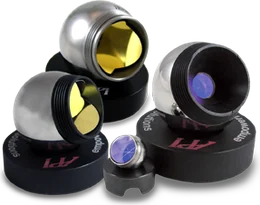
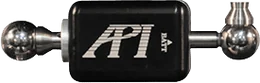
The setup is straightforward. A suitable laser target is mounted to the robot end effector, and the tracker is positioned where it can maintain line of sight throughout the motion sequence. Once locked onto the target, the tracker continuously records the robot's movement and sends the measured coordinates to RMS for analysis.
Because the Radian Pro can collect data at up to 1000 points per second, it is well suited for dynamic testing. That gives the team enough data density to analyze what happens not just at the start and end of a move, but during the event itself.
The Emergency-Stop Case
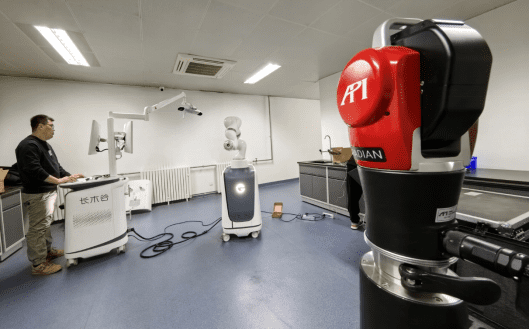
In this case study, the focus was emergency-stop performance on a batch of orthopedic surgery robots. The test was designed to answer a practical question: once an emergency stop is triggered, how much motion still occurs before the robot comes fully to rest?
That is not a theoretical concern. If the robot is carrying a blade, probe, or another sharp surgical tool, residual motion after a stop command can translate into real patient risk. The team needed to measure overshoot and the robot's maximum all-direction amplitude after the stop event so that behavior could be understood and tightened up.
The operator placed the Radian Pro near the robot and attached a precision target sphere to the robot's end. With the tracker in continuous-capture mode, the robot was moved through its range while random power-loss emergency stops were introduced. The tracker recorded the full path from motion start through complete stop.
What the Data Showed
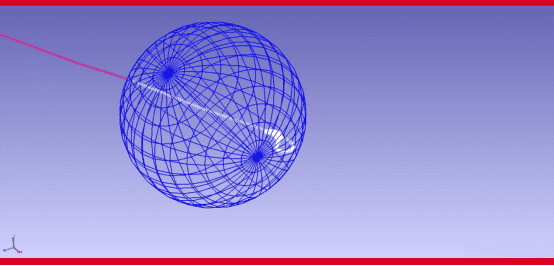
The measurement software separated the two parts of the event visually. The dark-red path shows the robot's movement before the emergency-stop command. The pink path shows the motion that continued after the stop command but before the robot settled completely.
From there, the team could build an envelope sphere around the post-stop point cloud and calculate the maximum amplitude of the robot end during the stop event. That turns a vague safety concern into something measurable, diagnosable, and improvable.

The Takeaway
This case is a strong example of where laser trackers bring real value to medical robotics. The challenge was not just to measure a robot once, but to capture high-speed motion accurately enough to assess safety-critical behavior. The Radian Pro made that possible with a cleaner workflow and better data for diagnosis.
For orthopedic surgery robot performance testing, that kind of measurement clarity matters. It gives manufacturers and validation teams a more direct way to understand how the robot behaves when precision and patient safety are both on the line.
For more information on orthopedic surgery robot performance testing, contact an API metrologist today.